Become a Microsoft MVP: Make Your Mark in Tech
Becoming a Microsoft MVP is a prestigious recognition for individuals who have made significant contributions to the tech community. This award highlights your expertise, dedication, and impact in your field.
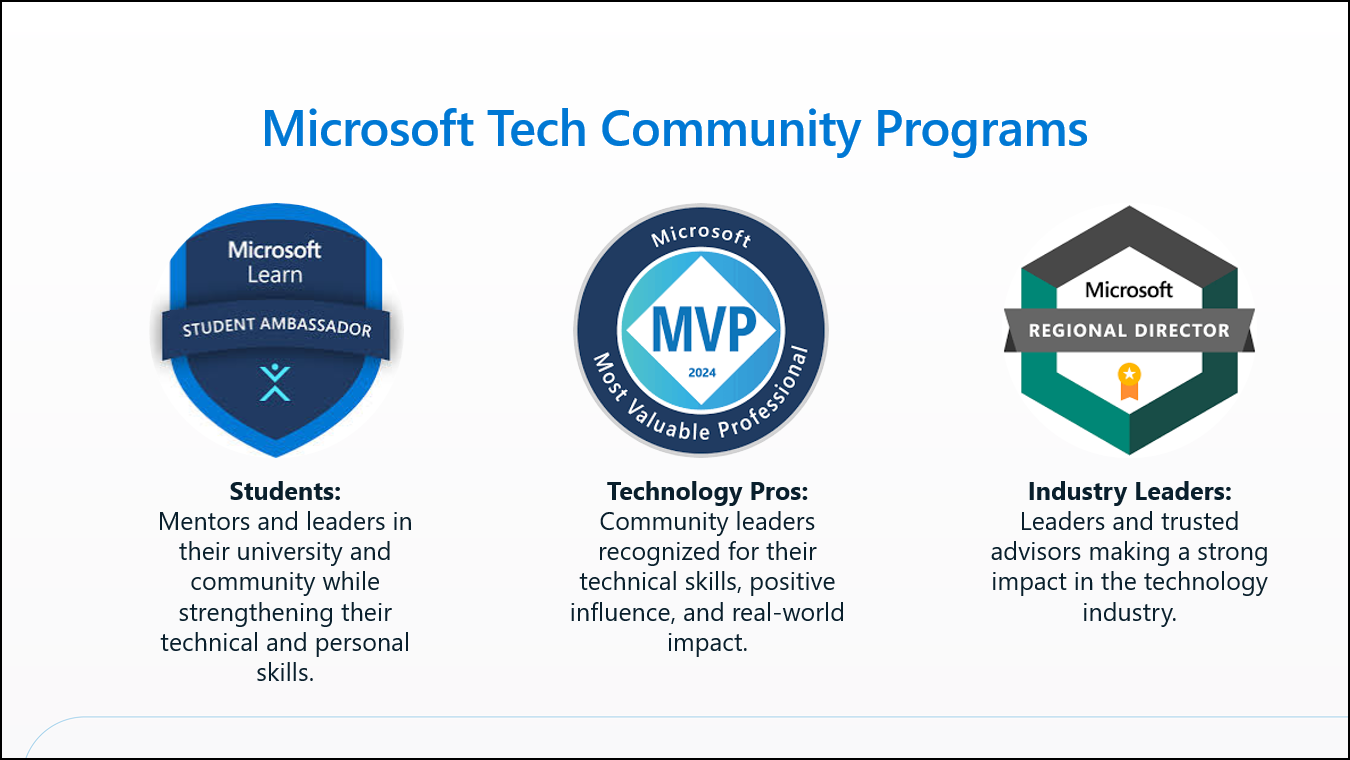
Before diving into what the Microsoft MVP program is, it is worth understanding that Microsoft is deeply committed to supporting the tech community at every level — from students taking their first steps in technology to seasoned industry leaders shaping its future. To that end, Microsoft offers three community programs, each designed to recognize and empower individuals at different stages of their journey.
Microsoft Community Programs
- Microsoft Learn Student Ambassadors: For students who want to amplify their impact by establishing themselves as mentors and leaders at their university or in their local community, while developing the technical skills and emotional intelligence needed to succeed.
- Microsoft Most Valuable Professionals (MVPs): For technology professionals recognized as exceptional community leaders for their technical expertise, positive influence on those around them, and commitment to solving real-world challenges with cutting-edge technology.
- Microsoft Regional Directors: For industry leaders and trusted advisors making significant contributions to their respective industries in technology, whose expertise and passion embodies Microsoft’s mission to empower every person and every organization to achieve more.
What is a Microsoft MVP?
Microsoft MVP (Most Valuable Professional) is an award given by Microsoft to “technology experts who actively share their knowledge and help others in the community”. It recognizes individuals who have made significant contributions to the tech community through activities such as writing blogs, speaking at conferences, creating tutorials, contributing to open-source projects, and more.
“For more than three decades, the Microsoft MVP Award has been our way of saying ‘Thanks!’ to outstanding community leaders.” — Microsoft
Who Are Microsoft MVPs?
MVPs are not just technical experts — they are community-driven individuals who stand out in three key ways:
- Passion for community: MVPs are driven by a genuine desire to share knowledge, mentor others, and give back to the tech community — fueled by curiosity and a collaborative spirit.
- Always on the cutting edge: They thrive on exploring new and emerging technologies, constantly staying ahead of the curve with an unstoppable drive to learn and experiment.
- Deep Microsoft expertise: They build and continuously evolve their knowledge of Microsoft products and services, applying it to solve real-world problems with practical, impactful solutions.
Where Are Microsoft MVPs Located?
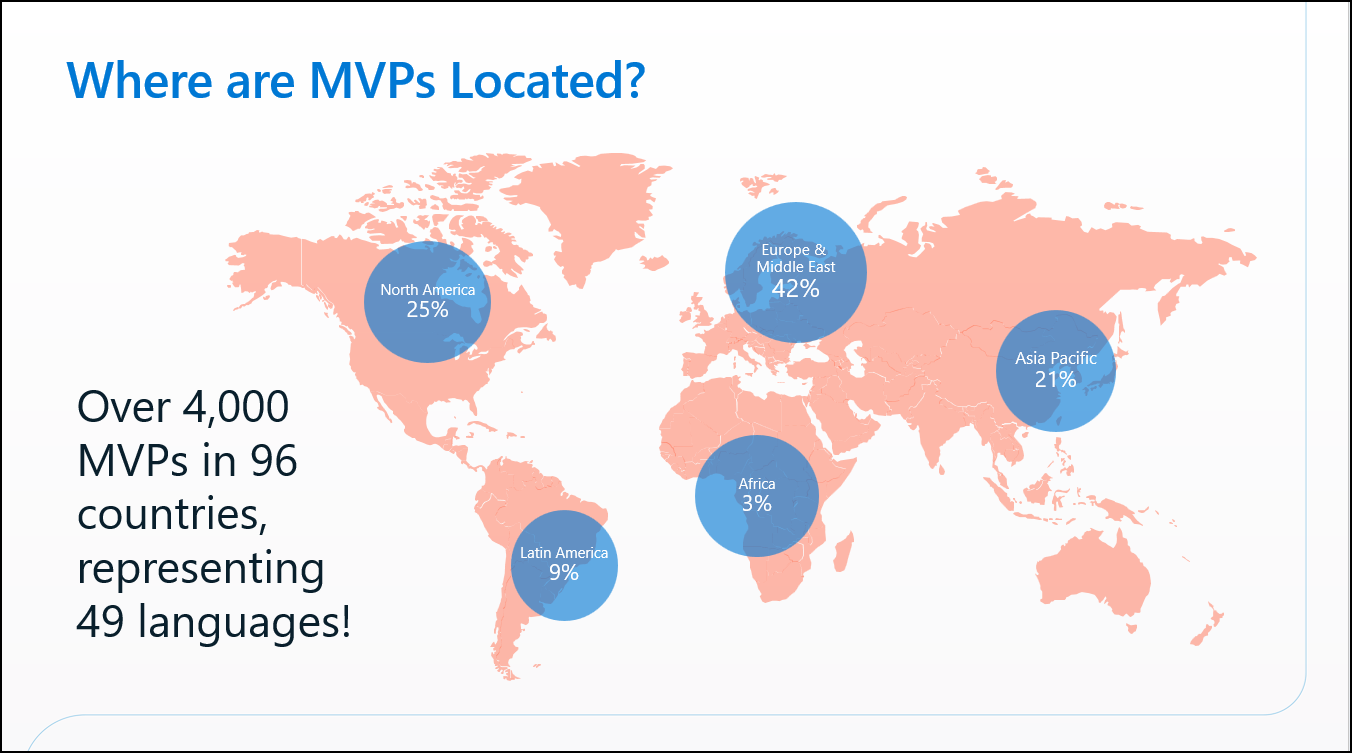
The MVP community is truly global — with over 4,000 MVPs spread across 96 countries and regions, communicating in 49 languages. They come from diverse backgrounds, cultures, and walks of life, yet share a common thread: a deep passion for technology and an unwavering commitment to empowering the community around them.
MVP Award Categories
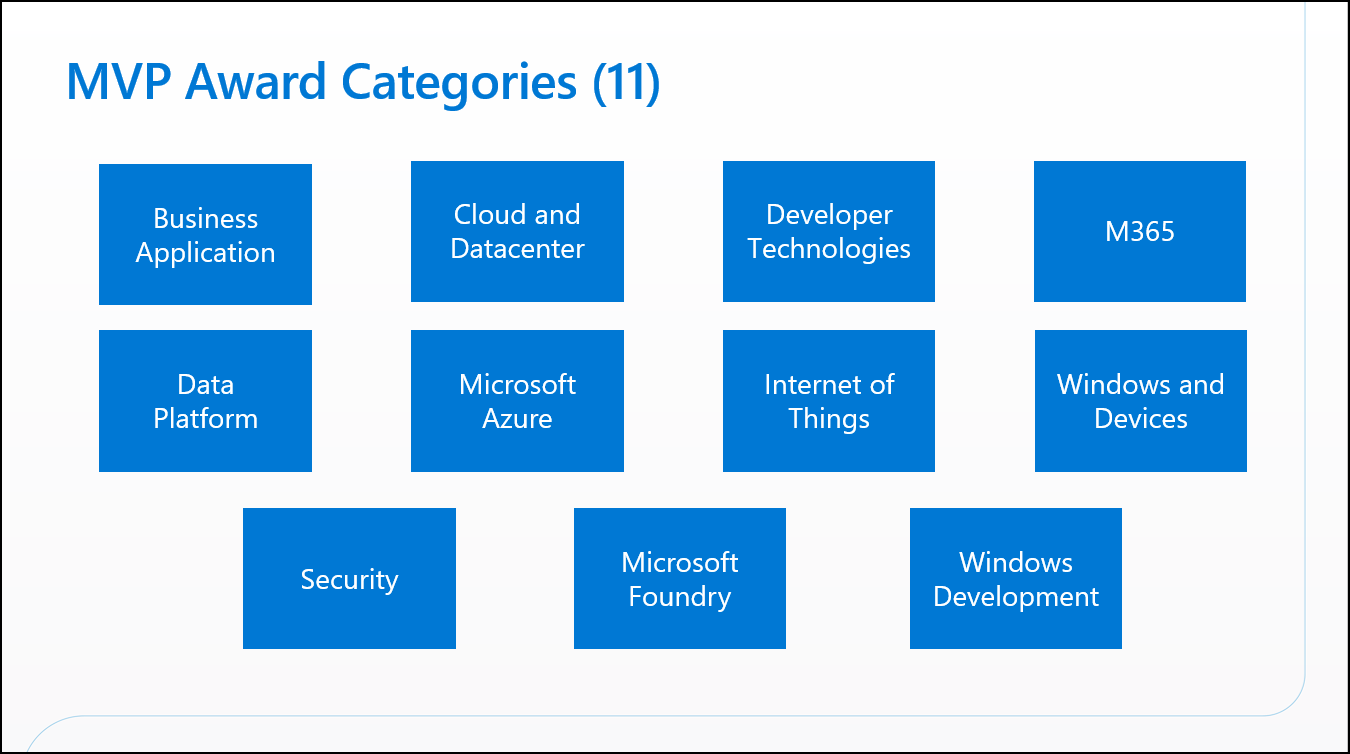
Microsoft MVPs are awarded across 11 categories based on their area of expertise, each covering a range of specific technology areas.
Show all categories and technology areas
- Business Applications:
- AI ERP
- Business Central
- Copilot Studio
- Customer Experience
- Customer Service
- Power Apps
- Power Automate
- Power Pages
- Cloud and Datacenter Management:
- Datacenter Management (Group Policy, System Center)
- Enterprise and Platform Security
- High Availability
- Hyper-V
- Linux on Hyper-V
- On-premises and Hybrid AKS, Container Management
- On-Premises Networking
- On-Premises Storage
- Windows Server
- Developer Technologies:
- .NET
- C++
- Developer Security
- Developer Tools
- DevOps
- Java
- Python
- Web Development
- M365:
- Access
- Clipchamp
- Excel
- Exchange
- Loop
- M365 Copilot
- M365 Copilot Extensibility
- M365 Development
- Mesh
- Microsoft 365
- Microsoft Graph
- Microsoft Teams
- Microsoft Viva
- OneDrive
- OneNote
- Outlook
- Planner
- PowerPoint
- SharePoint
- Visio
- Word
- Data Platform:
- Analysis Services
- Azure Arc (Arc SQL Server, Arc SQL MI)
- Azure Cosmos DB
- Azure Data Lake
- Azure Database for MySQL
- Azure Database for PostgreSQL
- Azure SQL (Database, Pools, Serverless, Hyperscale, Managed Instance, Virtual Machines)
- Azure Synapse Analytics
- Data Engineering & Data Science in Fabric
- Data Integration
- Database Development & DevOps
- Microsoft Fabric
- Microsoft Purview - Data Governance
- Paginated Operational Reports (RDL)
- Power BI
- Real-Time Intelligence
- SQL Server (on Windows, Linux, Containers)
- SQL Server ML Services
- Tools & Connectivity
- Microsoft Azure:
- Azure Application PaaS
- Azure Compute Infrastructure
- Azure HPC & AI Infrastructure
- Azure Hybrid & Migration
- Azure Infrastructure as Code
- Azure Innovation Hub
- Azure Integration PaaS
- Azure Kubernetes and Open Source
- Azure Networking
- Azure Operations & Management
- Azure Solutions & Ecosystem
- Azure Storage
- Azure Well-Architected & Resiliency
- PowerShell
- Internet of Things:
- Azure Edge Devices
- Azure IoT Services & Development
- Windows and Devices:
- Azure Virtual Desktop
- Surface
- Windows
- Windows 365
- Security:
- Cloud Security (Microsoft Defender for Cloud, Azure network security products, GitHub Advanced Security)
- Identity & Access
- Microsoft Intune
- Microsoft Purview
- Microsoft Security Copilot
- SIEM & XDR (Microsoft Sentinel & Microsoft Defender XDR suite)
- Microsoft Foundry:
- Microsoft Foundry
- Windows Development:
- Windows Design
- Windows Development
Benefits of Being a Microsoft MVP
Being recognized as an MVP comes with a rich set of exclusive benefits:
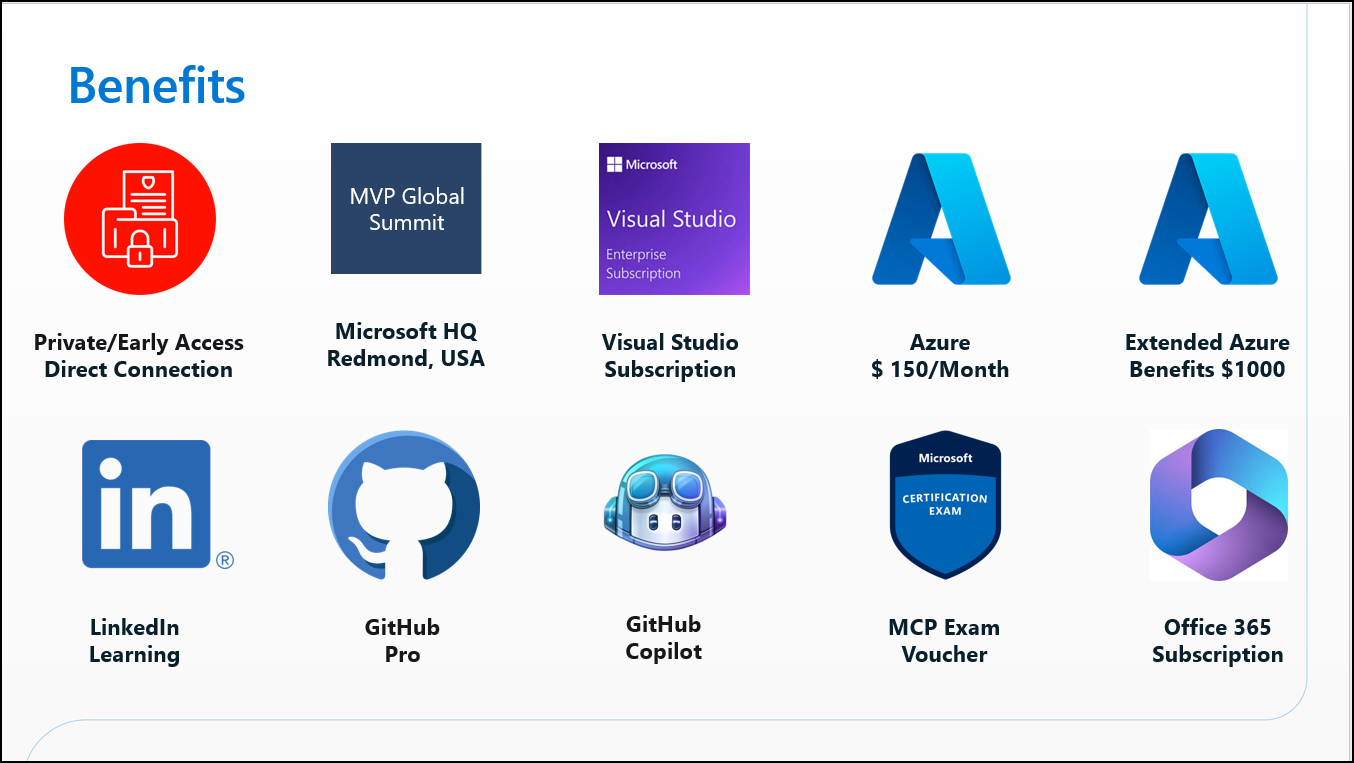
- Early product access: Get hands-on with Microsoft preview products before they are publicly released, along with direct communication channels with product teams — including upcoming roadmaps.
- MVP Summit: Receive an invitation to the annual MVP Summit, an exclusive event hosted at Microsoft’s global headquarters in Redmond, featuring sessions with Microsoft executives and livestreamed for MVPs around the world.
- Regional engagement: Connect regularly with local and regional Microsoft leaders who actively identify and create opportunities within your country or region.
- Recognition & credentials: Receive an executive recognition letter along with official MVP badges and credentials to proudly represent your status in online and customer-facing channels.
- Software & cloud benefits: Access a broad suite of tools and subscriptions, including Visual Studio Enterprise, Azure Credits, Microsoft 365, GitHub Copilot, LinkedIn Learning, additional third-party benefits, and many more.
Here is a snapshot of some of the benefits that come with being an MVP:
Here’s a glimpse of adding the 2025 crystal to my MVP award — one of the perks of being recognized:
What Microsoft Looks For
Microsoft recognizes individuals who make a meaningful impact in the tech community. There are many ways to contribute — and Microsoft evaluates candidates across several dimensions:
Ways to Contribute
- Community Organizer: Organize or participate in local meetups, user groups, or online communities related to your area of expertise.
- Public Speaker: Submit proposals to speak at tech conferences, webinars, or local meetups to share your knowledge and experiences.
- Content Creator: Write blogs, create video tutorials, or produce podcasts that provide valuable insights and information to the community.
- Open Source Supporter: Participate in open-source projects by contributing code, documentation, or providing support to the community.
- Mentor: Offer mentorship to individuals in the community, helping them grow their skills and navigate their careers in tech.
- Helper: Actively engage in forums, Q&A sites, or social media platforms to help others by answering questions and providing guidance.
Selection Criteria
- Technical expertise: A deep understanding of Microsoft technologies and a track record of sharing that knowledge with others.
- Community impact: A significant positive influence on the community through their contributions and engagement.
- Passion for technology: A genuine enthusiasm for technology and a commitment to helping others succeed.
- Product feedback: Strong candidates demonstrate a history of providing insightful, constructive feedback to Microsoft — contributing directly to the innovation and continuous improvement of its products and services.
- Alignment with Microsoft values: A commitment to Microsoft’s mission and values, including diversity, inclusion, and ethical behavior.
- Consistency: A sustained level of contribution and engagement over time, rather than one-time efforts.
How to Become a Microsoft MVP
- Contribute to the Community: Start making an impact through any of the contribution activities outlined above — writing, speaking, mentoring, open source, or community organizing.
- Build Visibility: Share your work consistently across platforms such as social media, forums, and community events so your impact is visible to others.
- Get Nominated: MVPs are nominated by their peers or Microsoft employees.
- Apply for the Award: Once nominated, you will receive an email with instructions on how to apply for the MVP award. The application process typically involves providing details about your contributions and impact in the community. Nominees have 45 days to complete the MVP Application.
- Selection Process: Microsoft reviews the applications and selects MVPs based on their contributions, impact, and alignment with the program’s values. The decision can typically take up to 90 days after you submit your MVP application.
- Receive the Award: If selected, you will receive the MVP award, which is valid for one year. You can then enjoy the benefits and recognition that come with being an MVP.
My Personal Tips
- Quality over quantity: Focus on meaningful, well-crafted contributions rather than chasing volume. One impactful blog post or talk is worth more than a dozen rushed ones.
- Don’t chase the award: Contribute because you are passionate about it, not to earn a title. The recognition will follow naturally.
- Be patient and consistent: Becoming an MVP is a journey that takes time. Don’t get discouraged if it doesn’t happen right away — keep showing up and making a difference.
- Leverage your network: Connect with current MVPs and other community leaders. They can offer guidance, support, and potentially nominate you.
- Stay updated: Keep up with the latest Microsoft technologies and the MVP program itself. Aligning your contributions with current trends shows you are actively engaged.
- Celebrate the journey: Whether or not you become an MVP, the impact you have made and the connections you have built along the way are valuable in their own right.
Conclusion
The MVP award is not the destination — it is a reflection of the journey you have already been on. If you have been sharing your knowledge, helping others, and staying curious about technology, you may already be closer to it than you think. Keep contributing, stay genuine, and let the recognition follow naturally.
To learn more, visit the official Microsoft MVP Program page.
You can also check out my MVP profile to see what an MVP profile looks like in practice.
If you are looking for mentoring or have any questions about the MVP journey, feel free to reach out to me on LinkedIn — I am always happy to help!